
Two packets of Turkish tea can make very different cups. One may contain large pieces of leaf; another, small dark fragments. One comes in a plain bag, the other in an elaborate tin. Price, presentation and leaf size are easy to compare. Deciding which tea you will enjoy takes a little more attention.
Choose Turkish black tea by checking its origin, ingredients, leaf fraction, packaging and the quality of the brewed cup. Large leaves and a higher price do not guarantee better tea, and broken leaf is not automatically inferior.
For most buyers, the useful question is which product gives a clean, enjoyable and repeatable result in the way they intend to brew it.
Start with a clear origin
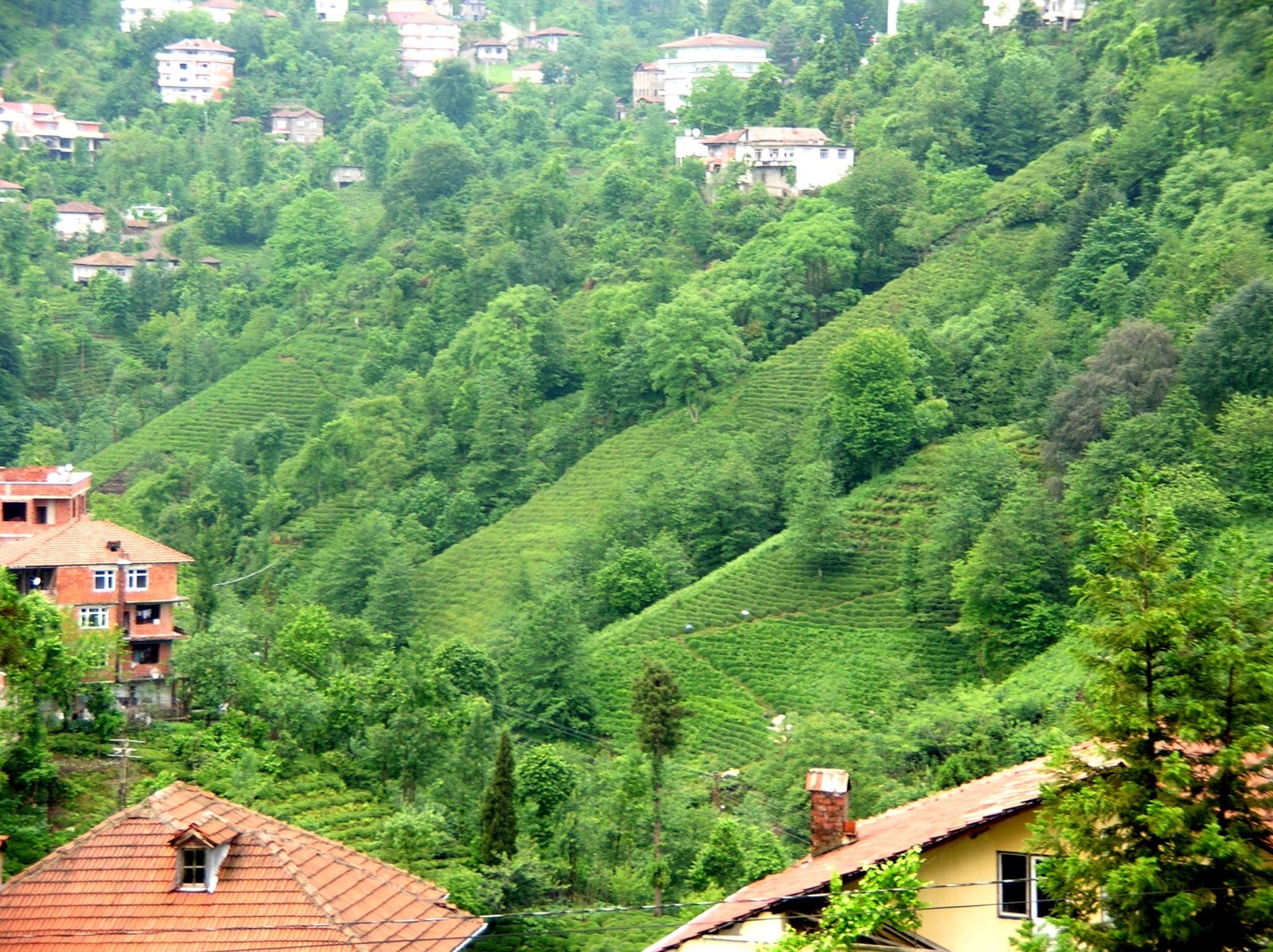
“Turkish tea” tells you something about a product's origin, but it does not identify a particular field, leaf grade or standard of flavor. Much of Turkey's tea-growing tradition belongs to the humid eastern Black Sea coast, with Rize among its best-known regions.
The name Rize Çayı has a registered designation of origin in Turkey. That is more specific than a general description of tea as Turkish. There are three different claims to keep apart: tea from Turkey, tea grown in Rize, and a product with a substantiated right to use the registered designation and its emblem.
If a seller makes an official certification claim, ask what documentation supports it. Attractive regional imagery cannot take the place of provenance. Our article on Rize tea explains the region, its history and the registered name in more detail.
Whole leaf or broken leaf?
It is tempting to treat large leaves as evidence of quality. They can look impressive, especially beside a finer-textured tea. Yet appearance leaves important questions unanswered: what condition was the fresh leaf in, how was it processed, and how has the finished tea been stored?
Whole-leaf teas contain relatively large pieces of processed leaf. Broken-leaf teas contain smaller particles. Both can make worthwhile tea. Their structures affect how they infuse, so they may need different handling to give the result you want.
Smaller particles generally expose more surface area to the water. Under otherwise comparable conditions, some components may be extracted more quickly. A broken-leaf tea can therefore be useful for preparing a full-flavored concentrate for Turkish-style service. Leaving it too long can also produce more astringency or cloudiness than you intended.
Neither observation makes particle size a complete quality score.
What the research actually shows
A 2019 study by Sinem Salman, Negin Azarabadi and Feramuz Özdemir examined a black-tea blend separated into different particle sizes and brewed for different lengths of time. The researchers found that particle size and brewing time affected extraction. The smallest fraction brewed for the longest period produced the highest measured extract, phenolic content and turbidity in that experiment.
That is evidence about how tea behaves in water. It does not establish that the smallest particles make the tastiest cup, nor that every finer tea will behave identically. The paper in Gıda supports a practical approach: consider the leaf fraction together with your brewing method, then taste the result.
What OP, BOP, fannings and dust tell you
Leaf-grading terms describe processed tea fractions. Their precise application can differ between production systems, so they are best read as useful descriptions rather than a universal ranking of flavor.
| Term | Meaning | What it broadly describes |
|---|---|---|
| OP | Orange Pekoe | A leaf-grade category |
| BOP | Broken Orange Pekoe | A broken-leaf fraction |
| Fannings | Fannings | Smaller tea particles |
| Dust | Dust | A very fine tea fraction |
A BOP label does not, on its own, mean that a tea is damaged, spoiled or second-rate. Likewise, an OP label cannot guarantee that you will prefer its flavor. The condition and composition of the particular tea still matter.
Read the ingredient list
For plain, unflavored Turkish black tea, look for black tea from Camellia sinensis as the sole ingredient. That is the clearest starting point if you want to taste the tea itself without added flavorings.
Other products can be perfectly legitimate choices: flavored black tea, mixtures containing other plants or fruit, fruit infusions and instant drinks. They simply answer different preferences. A pomegranate picture on a packet does not reveal which of those products it contains.
Read the full list rather than relying on the name on the front. “No added flavorings” is a useful product characteristic, but it is not a universal definition of superior tea. If you prefer a flavored blend, the relevant question is whether its ingredients and taste suit you.
For a closer comparison, see what tea people drink in Turkey.
What dry tea can reveal
Before brewing, check the package and the condition of the tea. The particles should make sense for the stated fraction or blend. A mixture of sizes may be intentional, but substantial unwanted material is a different matter.
Black tea is generally dark, although its appearance varies with the raw material and processing. Color is therefore a clue, not a verdict. Smell is useful too: a musty, moldy or clearly foreign odor is a reason not to use the product.
The packaging should protect the tea from moisture and contamination. A photograph of loose leaf cannot establish how it tastes or demonstrate its safety, however attractive the image may be. Dry-leaf inspection supplements a careful purchase; it does not replace proper controls or tasting.
Compare the cup under the same conditions
For Rize tea, the registered specification describes a reddish to dark red infusion, brightness, characteristic astringency, body and a black-tea aroma. Those qualities are useful reference points, but they need to be considered in a consistently prepared cup.
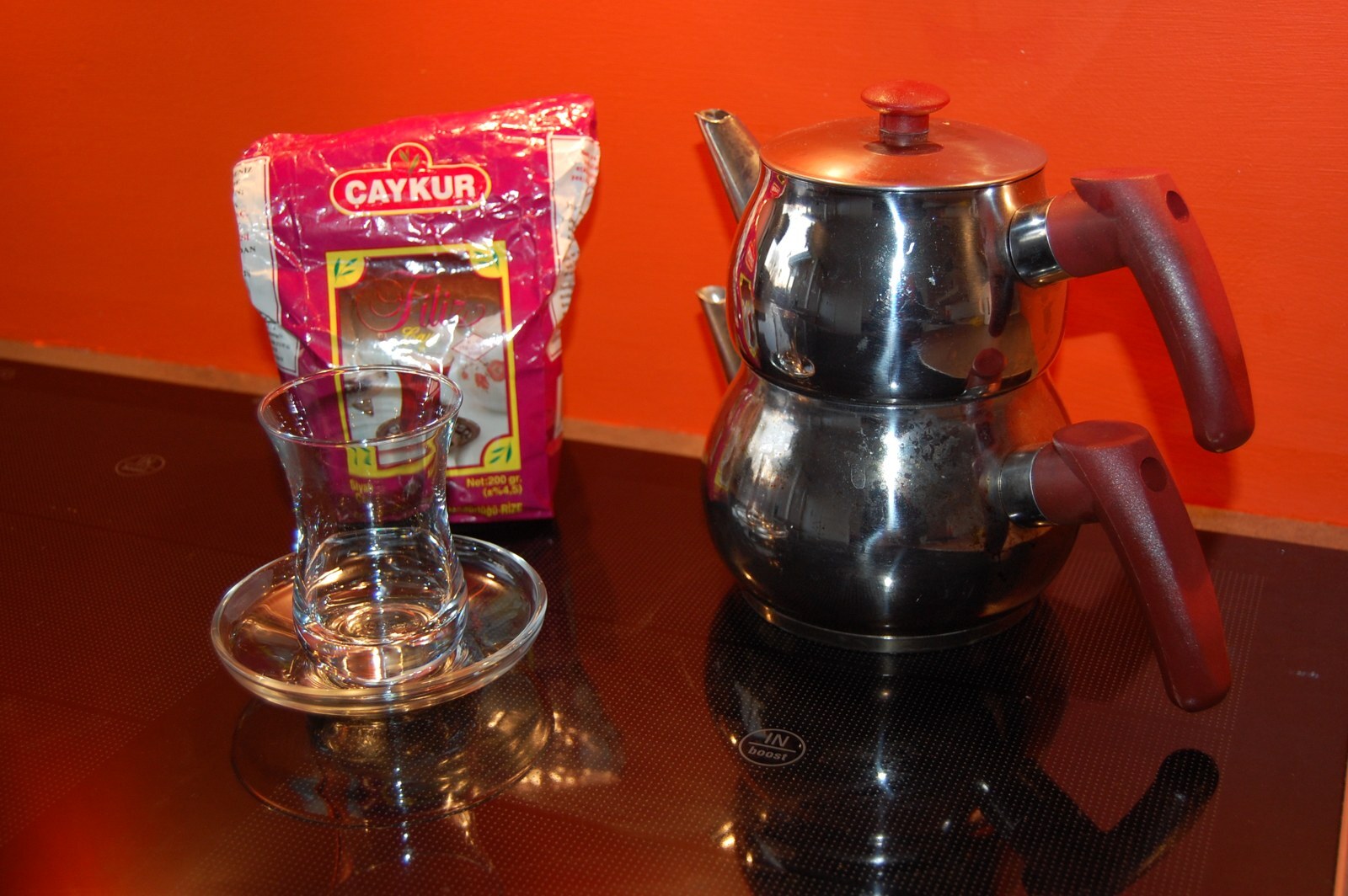
Keep the water, tea-to-water ratio, temperature and steeping time the same when comparing samples. Otherwise, a strong concentrate can appear more impressive than a diluted serving for reasons that have little to do with leaf quality.
Research by Astill and colleagues shows why this matters: both the tea and the preparation method influence what is extracted into the drink.
Taste for a balance of aroma, body, astringency and a clean finish. Astringency is normal in many black teas. It need not be a defect. Harsh bitterness, staleness or an unwanted aftertaste may point to a problem with the tea, its storage or the way it was prepared. Repeating the brew under controlled conditions can help separate those possibilities.
Our Turkish tea brewing guide explains how to prepare a concentrate in a çaydanlık and adjust its strength in the glass.
Choose packaging that protects the tea
Tea needs protection from moisture and strong surrounding odors. Store it in a dry place away from light, heat and intensely scented products, following the manufacturer's instructions after opening.
A metal tin can be convenient for regular use or gifting, provided it is suitable for food contact and offers the protection required. Its effectiveness depends on the lid, closure and overall construction as well as the material. The word “tin” does not, by itself, guarantee an airtight package.
Choose a pack size you can use and store sensibly. Presentation matters for a gift or a retail shelf, but it should support the product rather than distract from unclear labeling.
Buying for home, a café or a shop
At home, start with your preferred flavor and strength, a manageable pack size and a brewing method you are comfortable repeating. There is no need to choose the darkest infusion or the largest leaf simply because it looks more impressive.
For a café, consistency becomes more important. Ask about the specification, test the tea in your service method and assess whether staff can reproduce the same result. The tea that works well in a concentrate may be a different choice from one intended for a short individual infusion.
For a shop, clear labeling, ingredients, packaging and reliable repeat supply matter alongside the cup. For gift boxes, consider how the tea fits with the other foods and whether the packaging will remain intact during handling and transport.
These are different uses, so the best purchase need not be the same for every buyer.
Beyoğlu's Rize black tea

Beyoğlu Rize black tea · 250 g
TEA-250 · broken leaf · no added flavorings · metal tinIngredients and ordering detailsBeyoğlu Rize black tea, TEA-250, contains 100% black tea from Rize with broken leaf and no added flavorings. It comes in a 250 g metal tin for traditional tea drinking, retail assortments and gift selections.
The product page provides its composition, pack format and ordering information. For purchasing decisions that depend on a particular batch, check its labeling and request the relevant specification rather than assuming more than the product description states.
Frequently asked questions
What is the best Turkish tea to buy?
There is no single best tea for every drinker. Choose by origin, ingredients, leaf fraction, freshness and performance in your intended brewing method, then compare the brewed flavor under consistent conditions.
Is broken-leaf tea worse than whole-leaf tea?
No. Smaller particles change extraction, but particle size alone does not determine quality. Both whole-leaf and broken-leaf teas should be judged by their raw material, processing, condition and taste.
What does BOP mean on a tea packet?
BOP stands for Broken Orange Pekoe and describes a broken-leaf fraction. It is not, by itself, a guarantee of a particular flavor or a verdict that the product is low quality.
Is darker Turkish tea better?
Not necessarily. Color changes with the amount of tea, water and brewing time. Compare aroma, body, astringency and finish using the same preparation conditions rather than choosing on darkness alone.
Does Turkish black tea need added flavorings?
No. Plain black tea can contain tea as its only ingredient. Flavored blends are a separate choice; check the ingredient list to establish which product you are buying.
Is a metal tea tin always airtight?
No. Protection depends on the design and closure of the particular package. Follow the manufacturer's storage instructions and keep the tea away from moisture and strong odors.
Sources
- Salman, S., Azarabadi, N., and Özdemir, F. (2019). The Effect of Particle Size and Brewing Time on the Infusion Properties of Tea Blends. Gıda, 44(3), 442–452.
- Astill, C., et al. (2001). Factors Affecting the Caffeine and Polyphenol Contents of Black and Green Tea Infusions. Journal of Agricultural and Food Chemistry, 49(11), 5340–5347.
- TÜRKPATENT: the registered Rize Çayı designation.
- Turkish Ministry of Agriculture and Forestry: Tea Communiqué, 2015/30.
More to read over tea
Rize tea
The green slopes, twentieth-century tea industry and careful leaf processing behind a familiar glass of Turkish çay.
Tea in Turkey
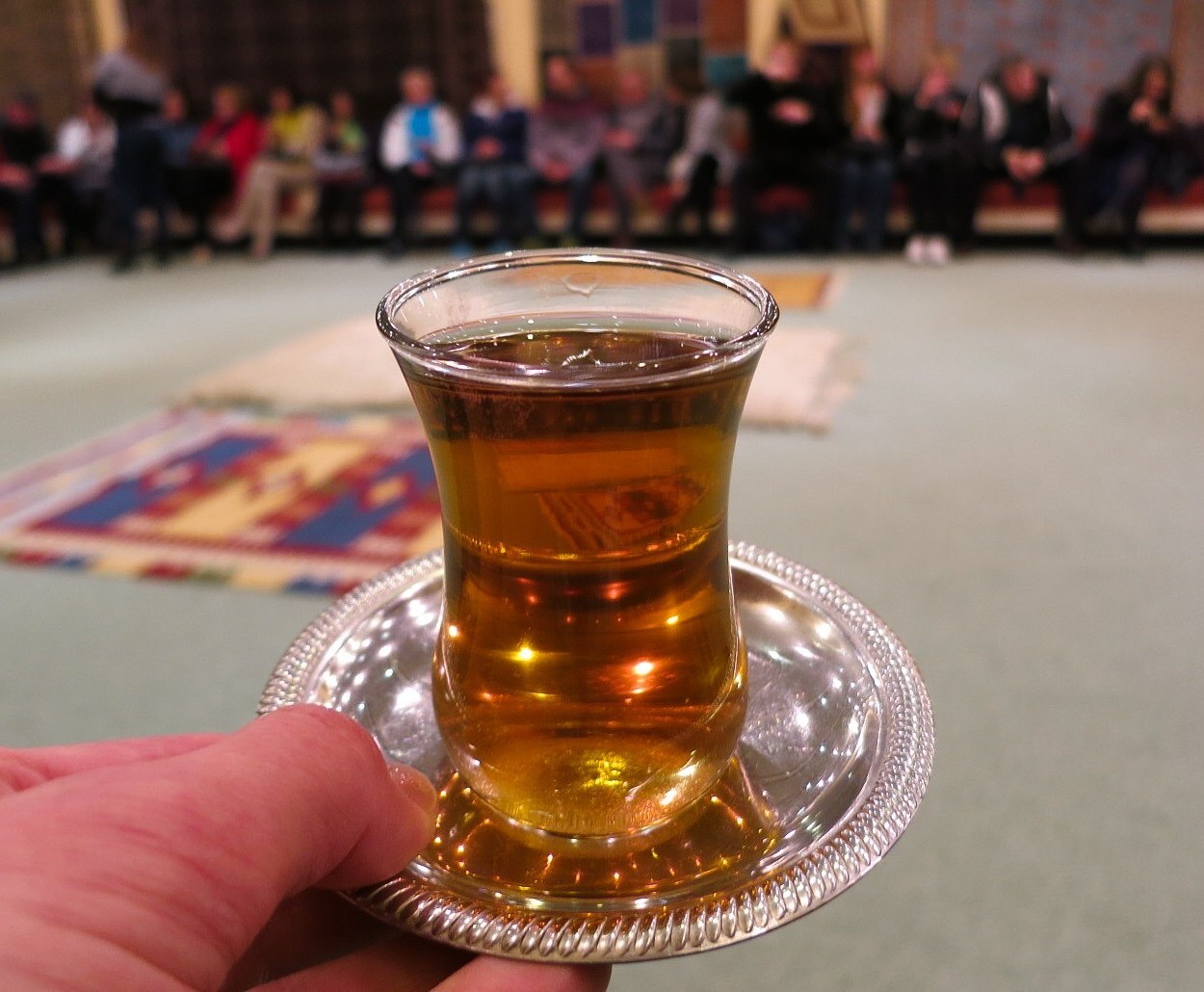
What arrives when someone offers you çay—and why apple tea, pomegranate drinks and instant powders need a closer look.
Try Rize black tea for yourself
See the ingredients, tin size and current ordering details for Beyoğlu’s broken-leaf black tea. For café, retail or gift projects, explore our wholesale information.
Article author and website operator: Oğuz Şahbaz.